
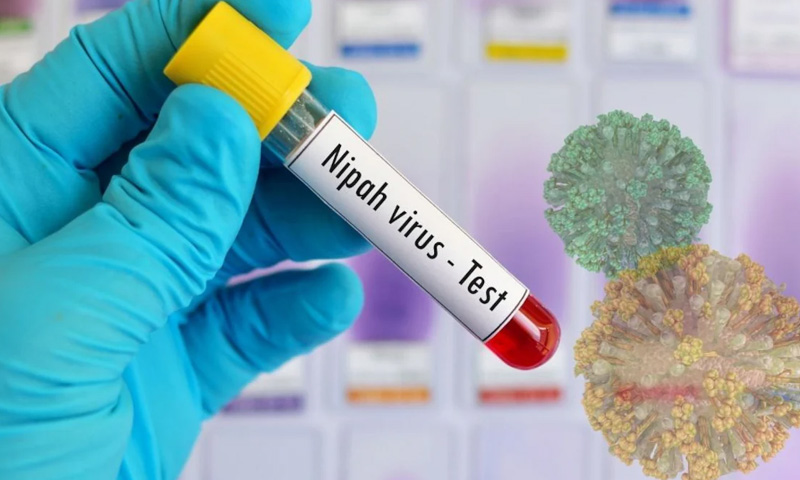

NEW DELHI: (Web Desk) – The World Health Organization (WHO) has confirmed two new cases of the deadly Nipah virus in India’s eastern state this week, prompting health authorities to step up strict monitoring to prevent its spread.
What is Nipah Virus?
According to WHO, Nipah virus is a dangerous pathogen that can be transmitted from animals to humans and, in some cases, from human to human. It was first identified in 1998 in Malaysia, when people contracted the virus from infected pigs. Since then, outbreaks have been reported in India, Bangladesh, the Philippines, and Singapore.
Source of the Virus
The natural reservoir of Nipah virus is fruit bats. While these bats do not fall ill, they carry the virus and can transmit it to humans.
Pakistan Strengthens Border Surveillance Against Nipah Virus
Modes of Transmission
Nipah virus can spread to humans through:
-
Animal contact: Direct interaction with infected bats or pigs.
-
Foodborne transmission: Consuming fruits or palm sap contaminated with the virus.
-
Human-to-human transmission: Close contact with infected patients or during caregiving.
Symptoms
Symptoms of Nipah virus typically appear 4 to 14 days after exposure, though in some cases they may take up to 45 days to manifest. Key symptoms include:
-
Fever, headache, and muscle pain
-
Vomiting and sore throat
-
Dizziness or weakness
-
Difficulty breathing
-
In severe cases: encephalitis (brain inflammation), seizures, and coma
Health officials are urging residents in affected areas to remain vigilant, avoid contact with bats and sick animals, and seek immediate medical attention if symptoms appear.
Comments are closed, but trackbacks and pingbacks are open.