

From Srinagar’s Lal Chowk to International Forums
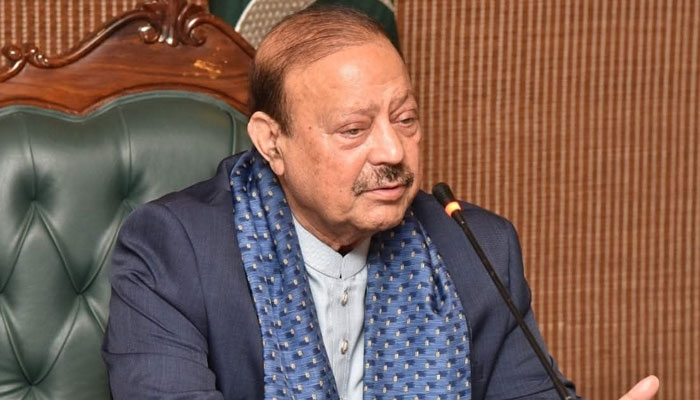
The news of the passing of Barrister Sultan Mahmood Chaudhry, President of Azad Jammu and Kashmir, is not merely the announcement of an individual’s demise; it marks the closing of a long, continuous chapter of the Kashmir freedom movement—one that resonated far beyond the region and echoed in international forums. Barrister Sultan Mahmood Chaudhry was among the rare Kashmiri leaders who succeeded in taking the Kashmir issue out of the confines of local politics and presenting it before the conscience of the world, dedicating his entire life to this cause. Kashmir remained the central axis of his politics, yet his approach was never confined to emotional slogans alone. He framed the Kashmir issue within the context of international law, human rights, diplomatic norms, and parliamentary traditions. It was this mature and strategic vision that carried his struggle to the corridors of power in the United Kingdom, Europe, and the United States. Whether through million marches, parliamentary briefings, international seminars, or human rights hearings, Barrister Sultan consistently appeared as a committed advocate for the Kashmiri people. The mass marches organized under his leadership in Western capitals powerfully conveyed the message that Kashmir is not merely a regional dispute, but a living human issue that the world cannot afford to ignore.

One of his most significant diplomatic achievements was the activation and institutional strengthening of Kashmir committees at the parliamentary level in the UK, Europe, and the United States. These committees did not remain symbolic forums; rather, through them, elected parliamentarians became the voice of the oppressed people of Indian-occupied Kashmir. Barrister Sultan briefed lawmakers on Kashmir’s historical background, United Nations resolutions, systematic human rights violations, and on-the-ground realities, thereby transforming the Kashmir issue from a fleeting media headline into a subject of serious policy discourse. This was not an effort aimed at short-term political gains, but a sustained struggle for long-term national and humanitarian objectives.
Within the political landscape of Azad Kashmir, Barrister Sultan Mahmood Chaudhry was far more than an officeholder; he was a principled and ideological leader. He believed in tolerance of dissent, promotion of dialogue, and keeping the Kashmir cause above internal political rivalries. As President of the State, and earlier in various political roles, he consistently maintained that the true identity of Azad Kashmir’s politics is inseparably linked with the freedom movement, and that any politics detached from this core loses its meaning. For this reason, he persistently emphasized that the Kashmir cause must remain central even in internal political discourse. His personality was marked by dignity, composure, and intellectual depth. Rather than relying on fiery rhetoric, he trusted reasoned argument, continuity of effort, and patience. At international forums, his speeches combined emotional appeal with legal and moral reasoning—an approach that did not merely impress audiences but convinced them. By aligning the Kashmir narrative with broader humanitarian values, he ensured that the international community perceived the issue not only as a political dispute, but as a moral responsibility. Barrister Sultan Mahmood Chaudhry’s passing comes at a time when the Kashmir issue is once again being debated on the complex chessboard of global politics. His absence undoubtedly leaves a void, yet the intellectual legacy he leaves behind—his diplomatic networks, strategic vision, and tradition of sustained struggle—will continue to guide future generations. He demonstrated that with clarity of intent, a strong narrative, and unwavering perseverance, even a small and disputed region can make its voice heard in the world’s most powerful chambers. He holds a unique and unparalleled distinction in the political history of Azad Kashmir: Barrister Sultan Mahmood Chaudhry was the only leader who visited Indian-occupied Jammu and Kashmir and addressed a large public gathering at Srinagar’s Lal Chowk. This was not merely a symbolic gesture, but a bold political, diplomatic, and moral act. For a people long subjected to isolation and repression, it delivered a powerful message—that their voice remains alive despite borders and barriers, and that the leadership of Azad Kashmir stands directly connected to their pain and aspirations. Lal Chowk, often portrayed as a symbol of Indian state authority, witnessed a moment that shattered the perception that Kashmiri leadership operates only from afar. Standing there, Barrister Sultan spoke of the Kashmiri people’s right to self-determination, political freedom, and human dignity. For many in occupied Kashmir, it was the first time they felt not alone, but part of a broader and shared struggle. That moment not only dismantled a psychological barrier within occupied Kashmir but also sent a clear message to the world: the Kashmir issue is a living conflict rooted in real human emotions and ground realities, one that cannot be silenced through force or imposed quiet. History will remember this act as a defining symbol of Barrister Sultan Mahmood Chaudhry’s resolve to take the Kashmir cause beyond conference halls and diplomatic meetings, directly to the people themselves. It is this courage and conviction that distinguish him as a unique and fearless leader in the political history of Azad Kashmir.
Today, as the Kashmiri people bid farewell to one of their most prominent voices, this moment is not only one of mourning but also of renewed commitment. The life of Barrister Sultan Mahmood Chaudhry bears witness to the truth that movements do not end with the departure of individuals; rather, they gain direction from their character and struggle. His services have become part of history, and the Kashmir freedom movement will continue forward, carrying his legacy as a guiding light. May Allah grant him a place in eternal peace, and may the Kashmiri nation find the strength to walk the path he so resolutely defined.
Comments are closed, but trackbacks and pingbacks are open.