
US Ambassador’s Seating Triggers Diplomatic Protocol Row in Turkey
Photo From Defence Ministry Meeting Fuels Political Backlash

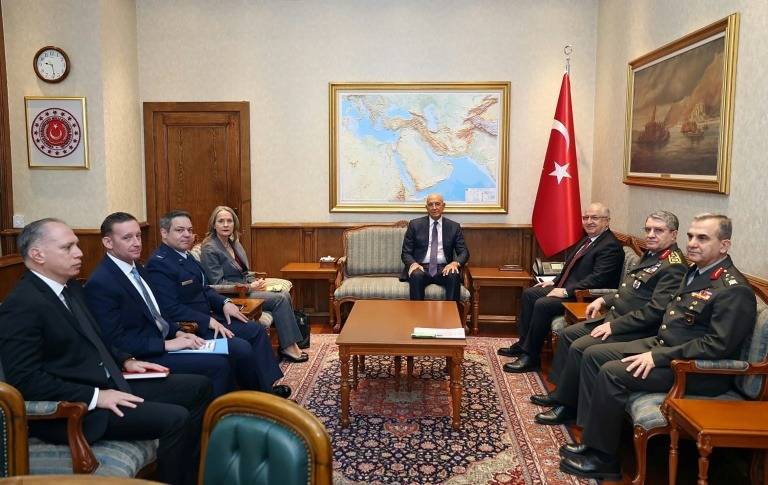
ANKARA (Web Desk) – A photograph showing US Ambassador to Turkey Tom Barrack seated prominently in the office of Turkey’s defence minister has triggered a political and public backlash, with critics questioning the seating protocol and accusing the envoy of projecting an overly dominant image.
The image, released by Turkey’s defence ministry, showed Barrack seated alone in the central chair during a meeting with Defence Minister Yasar Guler in Ankara on Friday, while Guler and senior military officials, including the chief of staff, were seated to the side. Barrack also serves as US President Donald Trump’s special envoy for Syria.
The photograph quickly sparked criticism on social media, with many interpreting the seating arrangement as portraying Turkish officials in a subordinate position. Lutfu Turkkan, a lawmaker from the right-wing IYI Party, questioned the optics of the meeting, asking whether Barrack was acting as an ambassador or a “colonial governor,” and said no one had the right to depict Turkey as weak.
In response, defence ministry officials told local media that the seating protocol was standard and not unique to the US ambassador, adding that similar arrangements are used for other visiting officials. However, veteran diplomatic journalists and former diplomats disputed this claim, describing the setup as highly unusual by international diplomatic standards.
Libya Army Chief, Top Officials Die in Aircraft Crash in Turkey
Barcin Yinanc, a senior diplomatic correspondent, said she had never witnessed such an arrangement in decades of reporting, noting that traditionally the host’s senior official occupies the principal position. She added that deviations from established diplomatic protocol have become more frequent in recent years under the current government, making the incident particularly striking given the military’s strict hierarchical culture.
Former ambassador to Washington and CHP deputy leader Namik Tan also criticized the arrangement, saying state protocol follows clear conventions and that officials responsible for such matters are expected to be fully aware of them.
The controversy also drew reaction from within the ruling party. Former parliament speaker and senior AKP figure Bulent Arinc said the incident appeared to be another protocol error, stressing that regardless of special assignments, Barrack remains an ambassador and should be treated as such. He called for an immediate review if the practice has become routine.
Turkey has faced similar protocol-related controversies in the past, including the 2021 “Sofagate” incident involving EU Commission President Ursula von der Leyen and a 2010 diplomatic snub involving Israel and Turkey’s then ambassador.
Comments are closed, but trackbacks and pingbacks are open.