

Prime Minister Muhammad Shehbaz Sharif’s Vision: Establishment of the “Pakistan Easy Service Center”
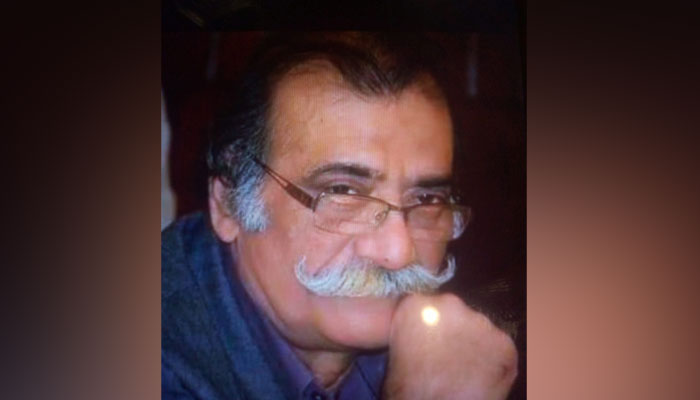
By: Syed Mujtaba Rizwan

Prime Minister Muhammad Shehbaz Sharif’s vision essentially reflects the idea of building a Pakistan where the state becomes a source of ease rather than a burden for its citizens; where government offices are not symbols of fear, favoritism, and delay, but are recognized for service, respect, and transparency. As a practical manifestation of this vision, the establishment of the “Pakistan Easy Service Center” is a revolutionary step aimed at reducing the distance between the people and the state, restoring public trust, and aligning government services with modern requirements. This concept is not merely an administrative reform; it represents an intellectual shift in which the government sees itself as a servant of the people and recognizes the citizen as the true owner of the state.
In Pakistan’s history, obtaining government services has always been a testing and exhausting process for ordinary citizens. Whether it involved identity documents, licenses, land records, police verifications, municipal matters, or social welfare facilities, people were forced to make repeated visits to different offices, face piles of files, endure officials’ attitudes, and waste precious time. Prime Minister Shehbaz Sharif, known for his speed, discipline, and results-oriented approach to administration, has long sought to change this system. He firmly believes that if the state cannot provide even basic services to its citizens with dignity, ease, and timeliness, then all claims of development become meaningless.
The concept of the Pakistan Easy Service Center emerges from the idea of providing as many government services as possible under one roof, so that citizens do not have to wander from one department to another. These centers ensure service delivery through modern technology, digital systems, trained staff, and transparent procedures. In the Prime Minister’s vision, these centers are not limited to major cities but are to be gradually expanded to smaller towns, tehsils, and even rural areas, in order to reduce the gap in facilities between urban and rural Pakistan.
A key aspect of this vision is the protection of citizens’ dignity. Prime Minister Shehbaz Sharif has repeatedly emphasized that a person who visits a government office is not seeking a favor, but claiming a legitimate right. The organized queue systems, punctuality, transparent fee structures, and prompt complaint-resolution mechanisms in Easy Service Centers reflect this philosophy. Here, the citizen is treated as a customer, whose convenience and satisfaction are the state’s top priority.
The establishment of the Pakistan Easy Service Center represents a move toward a governance model in which digitalization plays a central role. In Prime Minister Shehbaz Sharif’s vision, technology is considered an effective tool for eliminating corruption and promoting transparency. Online applications, biometric verification, digital records, and tracking systems ensure minimal human interference and make every stage traceable and accountable. This not only saves time and resources but also weakens deep-rooted evils such as bribery and favoritism.
These centers also promote coordination among federal and provincial departments. In a country like Pakistan, where the division of powers is a sensitive issue, bringing multiple departments onto a single platform was a major administrative challenge. Under the Prime Minister’s vision, Easy Service Centers fill this gap by enabling different institutions to maintain their identities while collectively providing services to citizens. This concept is the practical embodiment of the “one-window operation,” benefiting not only the public but also improving overall government performance.
According to Prime Minister Shehbaz Sharif, the scope of Easy Service Centers is not limited to documents or licenses; it extends to social welfare, business facilitation, and the promotion of investment. Business registration, tax-related guidance, labor affairs, and access to social protection schemes are being made available through these centers. In this way, they also play a vital role in promoting a documented economy and improving the business environment.

This vision also offers a ray of hope for the youth. A large portion of Pakistan’s population consists of young people who demand fast, transparent, and digital services. The modern IT systems, e-services, and online facilities at Easy Service Centers align with the expectations of the younger generation. The Prime Minister believes that when youth trust state institutions, they become more effective contributors to national development.
Special facilities for women, senior citizens, and persons with disabilities are also an integral part of this vision. Separate counters, priority services, wheelchair access, and supportive staff symbolize the state’s commitment to addressing the needs of all citizens. In Prime Minister Shehbaz Sharif’s view, the hallmark of a civilized state is its ability to make life easier for its most vulnerable segments.
Another significant aspect of the Pakistan Easy Service Centers is accountability and transparency. Each service has a clearly defined timeframe, fee, and procedure prominently displayed. Citizens have the right to track the progress of their applications and to lodge complaints in case of delays or mismanagement. In the Prime Minister’s vision, these complaints are not merely formalities but tools for immediate corrective action, enabling the system to continuously improve itself.
This initiative is a continuation of Prime Minister Shehbaz Sharif’s administrative philosophy, which he has demonstrated in the past through various development projects and reforms. He believes that rather than making grand claims, what truly matters is creating tangible ease in the everyday lives of ordinary people. The Easy Service Center is a practical expression of this philosophy, where government performance is directly visible to the public.
In a developing country like Pakistan, where resources are limited and challenges are numerous, implementing such reforms is not easy. However, in the Prime Minister’s vision, determination, continuity, and oversight are the key elements. Continuous evaluation of these centers’ performance, staff training, and system improvements ensure that this initiative does not remain temporary but evolves into a sustainable institutional reform.
This vision redefines the relationship between the state and the citizen. Where once citizens felt helpless and perceived the government system as inaccessible, an environment is now being created in which the state itself reaches the citizen’s doorstep. Easy Service Centers symbolize the belief that the true purpose of governance is service, not power.
From an international perspective as well, this initiative enhances Pakistan’s positive image. Modern, transparent, and citizen-friendly services improve a country’s reputation. Under Prime Minister Shehbaz Sharif’s vision, the Pakistan Easy Service Centers not only strengthen domestic governance but also send a message to foreign investors and the global community that Pakistan is moving steadily on the path of reform.
Ultimately, it can be said that the establishment of the Pakistan Easy Service Center is a reflection of Prime Minister Muhammad Shehbaz Sharif’s vision of a dignified, organized, and people-friendly Pakistan. If pursued with sincerity, continuity, and integrity, this initiative will not only transform the structure of the government system but also strengthen public trust and respect for the state. This vision acknowledges the truth that nations are built not only through mega projects but through small, meaningful conveniences—and when the state makes life easier for its citizens, progress naturally follows.
Comments are closed, but trackbacks and pingbacks are open.