

Quaid’s Vision, Modern Might: Pak-China Warrior IX Military Drill Signals Pakistan’s Growing Strategic Confidence
(Abdul Basit Alvi)

The Pakistan–China partnership, established in 1951, has evolved into a uniquely resilient “All-Weather Strategic Cooperative Partnership” grounded in mutual security interests, regional stability, and long-term strategic alignment. Beginning with Pakistan’s early recognition of the People’s Republic of China, the relationship has strengthened across decades through consistent political cooperation, expanding economic ties, and deeply rooted defense collaboration. This trust intensified after the 1960s, when Western arms embargoes pushed Pakistan toward China as its primary and most reliable defense partner. Over time, foundational agreements and sustained military cooperation—extending even to nuclear assistance in the 1990s—cemented the relationship as one of exceptional strategic depth and reliability.
In recent decades, the partnership has advanced far beyond arms procurement into comprehensive co-production and co-development programs, exemplified by the JF-17 Thunder fighter aircraft and extensive naval cooperation, including fast attack craft, frigates, and submarines. China has also become a major supplier of advanced artillery and air defense systems, enabling Pakistan to expand its technological capabilities and operational readiness. Economically, the launch of the China-Pakistan Economic Corridor (CPEC) has transformed the relationship into one of deep structural interdependence. As a flagship project of China’s Belt and Road Initiative, CPEC links Gwadar Port with Xinjiang through a vast network of energy, transport, and digital infrastructure, reshaping Pakistan’s economic landscape while giving China a secure and direct trade route to the Arabian Sea. This blend of military, economic, and infrastructural integration has elevated the partnership to a level of enduring strategic significance for both nations.
This extraordinary, unparalleled, and highly symbiotic level of defense and economic integration and strategic alignment was subsequently subjected to what numerous global military observers viewed as its most rigorous, high-stakes, and ultimate operational test during the highly sensitive and consequential May 2025 India–Pakistan conflict, an intense, brief armed confrontation frequently and proudly designated by the Pakistani military side as Marka-i-Haq (the Battle of Truth or Right), an episode where the highly modern and capable Pakistan Air Force (PAF) is extensively reported by international defense analysis reports, including those from US Congressional sources and respected think tanks, to have showcased an exceptional, world-class level of operational preparedness, tactical acumen, and strategic performance, decisively leveraging its advanced, modern, meticulously integrated, and strategically formidable Chinese-origin military assets against the opposing Indian forces, including the versatile JF-17 Block III and the recently acquired, semi-stealthy J-10CE “Firebird” single-engine fighter jets, which feature sophisticated AESA radar and integrated, state-of-the-art electronic warfare suites, alongside cutting-edge, long-range weaponry like the highly effective PL-15 long-range air-to-air missiles and the strategic HQ-9 long-range surface-to-air air defense systems, which were successfully, professionally, and decisively deployed in both intense beyond-visual-range air-to-air combat scenarios and highly accurate precision strike missions against strategic targets of high value; detailed, in-depth post-conflict analyses strongly indicate that the integration of the PL-15E missiles on the PAF’s Chinese-origin fleet provided a critical stand-off capability that reduced detection risk and exploited gaps in the adversary’s detection capabilities, with Pakistani officials claiming highly effective long-range aerial kills, a remarkable, high-impact military outcome that has demonstrably and significantly raised the global credibility and export potential of the entire, modernized Chinese-Pakistani defense inventory and forcefully underscored the profound, strategically fruitful, and technologically game-changing results of their long-standing partnership in technological transfer and deep defense alliance, a strategic force multiplier which proved absolutely instrumental in enabling the Pakistani military apparatus to perform with exceptional skill, operational effectiveness, and undeniable professionalism against a formidable, well-equipped adversary, successfully showcasing an integrated, seamless Sino-centric defense architecture that delivered strategic results.
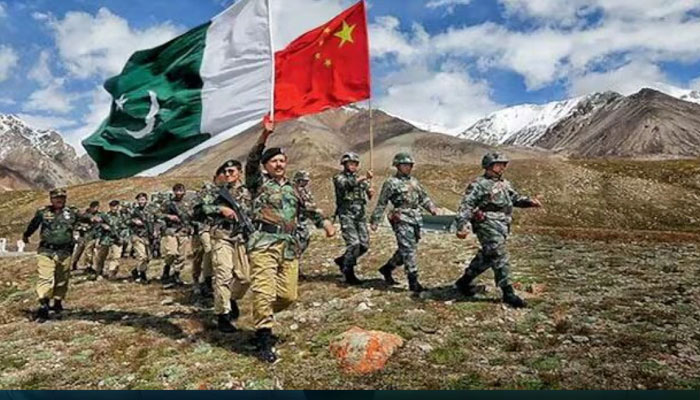
Further providing a tangible, practical, and highly visible demonstration of their enduring defense ties, strategic alignment, and shared, non-negotiable commitment to effectively battling contemporary and highly complex security challenges, including the persistent regional threat of cross-border terrorism and extremism that plagues the region, the specialized and highly trained forces of the Pakistan Army and the elite contingents of the People’s Liberation Army (PLA) of China, specifically drawn from the strategically important Western Theater Command, have recently and successfully started their flagship, high-intensity joint military exercise, appropriately code-named, “Warrior-IX,” marking the highly significant ninth edition in this crucial, annually held series of bilateral counter-terrorism drills, an exercise which is officially commenced and rigorously executing at the sophisticated, high-tech facilities of the National Counter-Terrorism Centre (NCTC), strategically located in Pabbi, which is widely recognized as one of South Asia’s premier specialized counterterrorism training facilities, the very selection of which location reflects the two nations’ deep, joint dedication to actively maintaining regional peace and stability in an increasingly complex and strategically volatile regional environment. This highly focused exercise, which will run for several intensive weeks from late November through to the middle of December, will concentrate its intensive, demanding training efforts on the complex and highly relevant subject of “joint anti-terrorist elimination and suppression operations,” utilizing highly realistic, real-world simulated scenarios and highly advanced counter-terrorism tactics that are meticulously designed to rigorously test and significantly enhance the participants’ skills in complex urban warfare, hostage rescue, close-quarters combat, and targeted strikes; the entire training regimen is purposefully structured with the clear, primary, and measurable aim of significantly enhancing technical and tactical interoperability between the specialized contingents and task forces of both militaries in highly dynamic, complex joint operational scenarios, simultaneously and vigorously working to hone the professional skills of the participating soldiers through highly rigorous, specialized training and to actively promote the crucial, two-way exchange of advanced warfare techniques, cutting-edge technologies, and proven best practices to ensure both allied forces are maximally equipped to effectively counter the complex, continually evolving, and transnational threat of terrorism and internal insurgency in the broader region. The highly successful and collaborative conduct of Exercise Warrior-IX therefore stands as a powerful, unambiguous, and practical testament to the robust, reliable, and continually deepening military-to-military relations and the continued, unwavering strategic alignment between these two Iron Clad Brothers, emphatically reaffirming their deep mutual trust and their shared, unshakeable commitment to proactively fostering and ensuring long-term regional security, building upon a foundational partnership that has consistently, reliably, and strategically proven its remarkable resilience, undeniable value, and enduring relevance across multiple decades and through numerous complex geopolitical shifts and security challenges.
In line with Quaid-e-Azam’s vision of building Pakistan into a modern and powerful state, the Pak–China Warrior IX military drill reflects the country’s growing strategic confidence. Through close coordination with its iron-clad friend China, Pakistan has emerged as a strong and resilient nation, fully aligned with the true ideals of Quaid-e-Azam Muhammad Ali Jinnah. The deepening Pak–China defence partnership continues to reinforce Quaid’s Pakistan by enhancing national security and stability. On the occasion of Quaid-e-Azam’s birthday this year, Pakistan stands renewed—equipped with robust and foolproof defence capabilities that inspire confidence and satisfaction among its people.
Comments are closed, but trackbacks and pingbacks are open.