
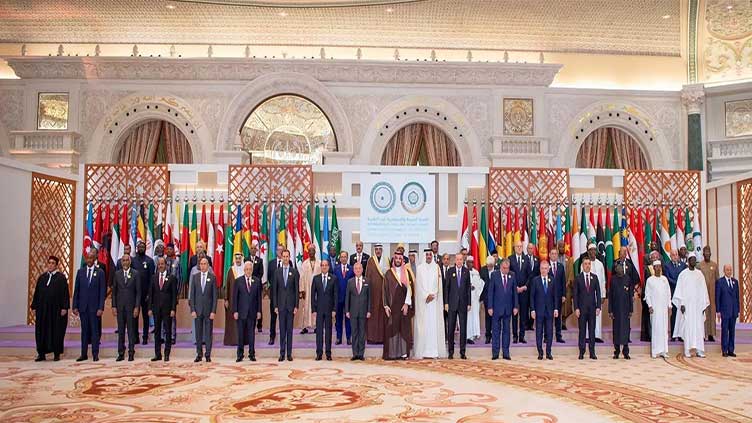
From Intellectual Decline to Ideological Awakening: The Muslim Ummah and Pakistan
(By Dr. Muhammad Tayyab Khan Singhanvi, Ph.D)

The history of the Muslim Ummah is marked by a magnificent intellectual, civilizational, and cultural legacy. The Ummah that once presented the world with an organized social order based on knowledge, justice, tolerance, and human dignity today appears trapped in intellectual fragmentation, political weakness, economic dependence, and cultural disorientation. The question is not merely why the Muslim Ummah declined; the more fundamental question is what the intellectual and practical path out of this decline is. In this context, the significance of the Ideology of Pakistan and its practical realization assumes extraordinary importance, because Pakistan was and remains not merely a geographical state but a laboratory of ideology.
If we turn the pages of history, it becomes evident that the decline of the Muslim Ummah was not the result of a single day or event. Rather, it was the outcome of prolonged intellectual stagnation, internal weaknesses, and external pressures. After the fall of the Ottoman Caliphate, the Muslim world became practically fragmented. Colonial powers divided Muslim lands along geographical, ethnic, and linguistic lines, shattering their collective strength. As a result, Muslims gradually lost their civilizational identity and intellectual self-confidence.
Against this dark backdrop, the Muslims of the Indian subcontinent demonstrated an extraordinary intellectual awakening. Sir Syed Ahmad Khan’s educational movement, Allama Iqbal’s intellectual revolution, and Quaid-e-Azam Muhammad Ali Jinnah’s political vision were, in fact, practical manifestations of the revival of a declining Ummah. The Ideology of Pakistan was the logical outcome of this intellectual continuum. It represented the recognition that Muslims are not merely a religious group but a complete civilizational and intellectual entity, with a distinct way of life, values, and collective objectives.
Allama Iqbal urged Muslims not to live solely on the pride of the past but to embrace selfhood (khudi), action, and ijtihad. In his view, Islam is not a static religion but a dynamic code of life that demands fresh intellectual reconstruction in every age. This very conception of religion constitutes the intellectual soul of the Ideology of Pakistan. Quaid-e-Azam also repeatedly emphasized that the purpose of Pakistan was to establish a state where Muslims could live freely in accordance with their civilizational values and where justice, law, and equality could be given practical form.
Unfortunately, after the creation of Pakistan, we failed to fully implement this ideological foundation at the practical level. Political instability, constitutional crises, class disparities, and institutional weaknesses continued to obstruct Pakistan’s intellectual journey. Consequently, Pakistan capable of becoming a beacon of hope for the Muslim Ummah became entangled in its own internal contradictions. This situation limited our role not only at the national level but also in the broader context of the Muslim world.
Today, the challenges faced by the Muslim Ummah human tragedies in Palestine, Kashmir, Syria, Yemen, and other regions are not merely political conflicts but symbols of the collective weakness of the Muslim world. There is no effective shared strategy, no strong economic bloc, and no unified intellectual narrative in the Islamic world. In such circumstances, the practical realization of the Ideology of Pakistan once again demands our attention, because this ideology offers the Ummah a model for organizing collective life on Islamic principles while remaining within the framework of the modern nation-state.
The practical realization of the Ideology of Pakistan does not mean limiting ourselves to a few religious slogans or symbolic measures. It requires the promotion of social justice, the rule of law, economic equity, educational reform, and intellectual freedom at the state level. A state where merit, transparency, and moral values guide decision-making is the kind of state that can become a model for the Muslim Ummah. This is precisely where Pakistan can fulfill its ideological responsibility.
Education is the key to this entire process an education that does not merely award degrees but nurtures intellectual self-confidence, critical thinking, and moral responsibility. As long as we fail to teach our younger generation how to connect the intellectual essence of Islamic civilization with the demands of the modern world, the Ideology of Pakistan will remain nothing more than a slogan. Likewise, a principled foreign policy, economic self-reliance, and practical cooperation with the Muslim world are indispensable.
Finally, we must accept the reality that lamenting the plight of the Muslim Ummah will not solve its problems. We must play our own role. If Pakistan truly understands the spirit of the Ideology of Pakistan and gives it practical form, it will not only strengthen itself internally but can also emerge as an intellectual and practical guide for the Muslim world. This was Pakistan’s original promise and this remains its historical responsibility.
Comments are closed, but trackbacks and pingbacks are open.