
Inflation Set to Accelerate in November as Food Costs Surge
Transport inflation is expected to decrease by 0.05 percent, driven by a decline of 0.1 percent in motor fuels.

ISLAMABAD: Pakistan’s Consumer Price Index (CPI) for November 2025 is expected to settle between 6.5 percent and 7.0 percent, compared with 6.25 percent in October 2025 and 4.86 percent in November 2024.
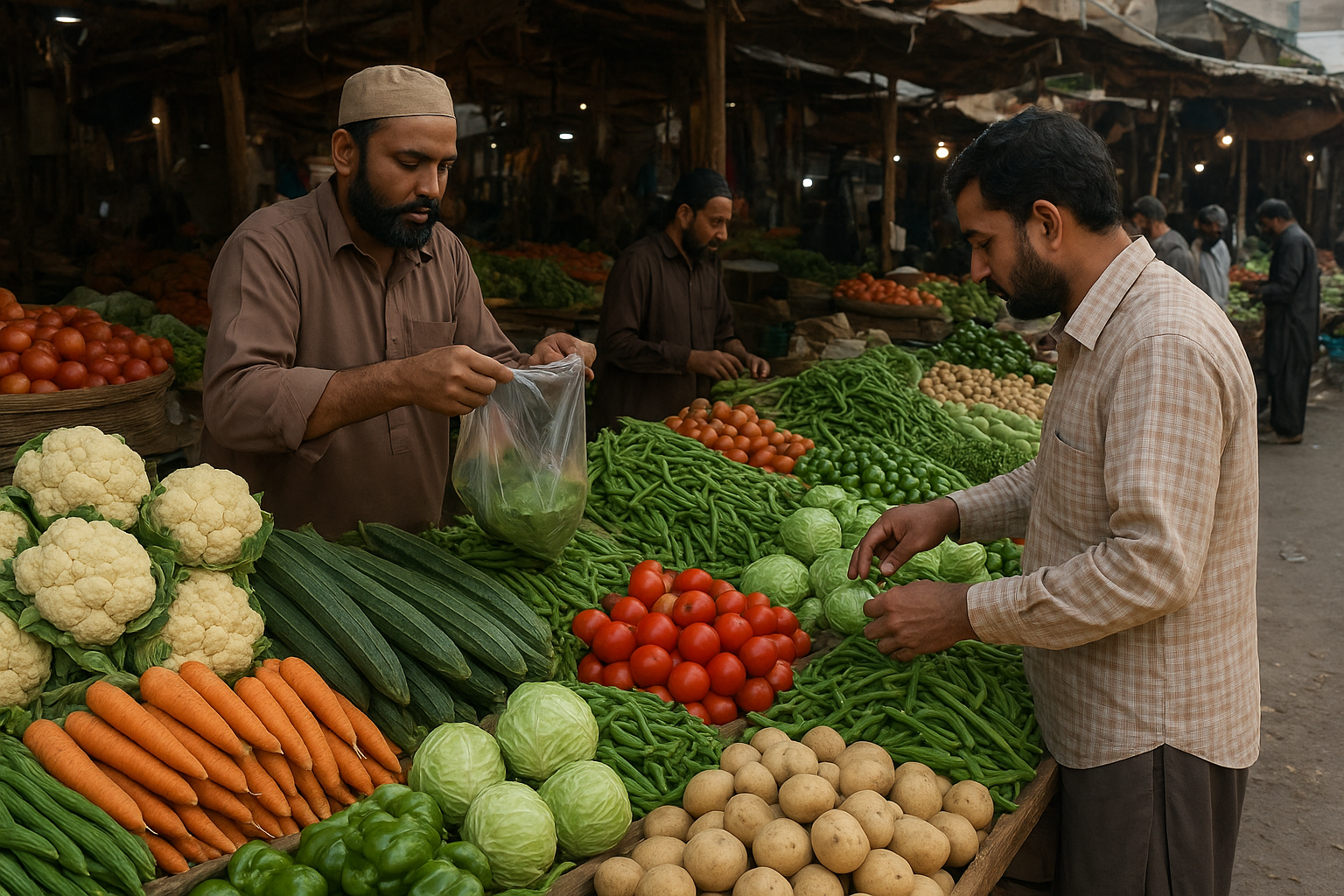
On a month-over-month basis, inflation for November is projected to rise 0.8 percent, driven largely by food prices affected by floods and the temporary closure of the Afghan border, which disrupted national supply chains, according to a report by Topline Securities.
The expected rise in food inflation comes from notable increases in key items such as onions up 59 percent, chicken up 16 percent, meat up 15 percent, and fresh vegetables up 12 percent.
However, tomatoes recorded a 56 percent decline, due to a supply surge that helped soften the overall increase in food costs.
The Housing, Water, Electricity, and Gas category is projected to rise 0.79 percent month over month. This is mainly due to a 2.83 percent increase in electricity charges during the month.
Read more: Pakistan’s CPI Hits 12.6% in June
The quarterly tariff adjustment of Rs. 1.8881 per kilowatt hour applied earlier has not been carried into November, while a Fuel Charges Adjustment of negative Rs. 0.4812 per kilowatt hour has been posted for the month.
Transport inflation is expected to decrease by 0.05 percent, driven by a decline of 0.1 percent in motor fuels. Petrol prices are down by 1 percent, while high-speed diesel has risen 0.8 percent.
For November 2025, analysts expect inflation to remain in the 6.5 percent to 7.0 percent range, with real interest rates staying strongly positive at around 4.38 percent.
With inflation expectations anchored around this level, real rates are projected to stand close to 400 to 450 basis points, well above Pakistan’s long-term average of 200 to 300 basis points.
Key risks to the inflation outlook include global commodity market volatility, which continues to pose uncertainties for Pakistan’s inflation path in the coming months, said the report.
Comments are closed, but trackbacks and pingbacks are open.