
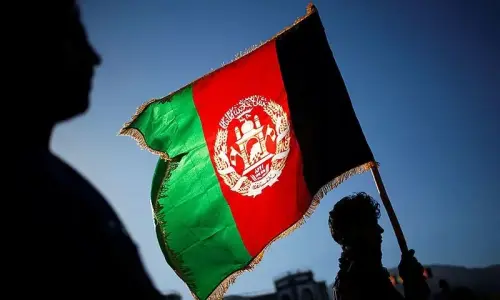

“Afghanistan is where Afghans are buried alone — there is no superpower buried there ever.”
This single line dispels one of the biggest historical myths parroted by both Pakistani narrators and their YouTube historians — that Afghanistan is the “graveyard of empires.” But the reality rests buried in piles of misplaced pride and warped history.
A Land Occupied by Ten Nations
Afghanistan has not been the destroyer of empires in history but the occupied land of empires. Ten great powers have dominated, governed, and conquered it across various centuries — each leaving profound cultural and genetic traces on its ground.
- Greece
- Persia (Iran)
- Turkey (Ottoman and Ghaznavid)
- Uzbekistan
- Tajikistan
- Mongolia
- England (British Empire)
- Russia (Soviet Union)
- America (United States)
- India (Sikh Empire)
India’s influence was confined primarily to Kabul in the time of Maharaja Ranjit Singh, and those places were subsequently restored. The tribal Pashtun zone and frontier provinces were incorporated into what became Pakistan later in the same period.
From Alexander to the Americans
When Alexander the Great conquered the Afghan highlands, he defeated the Pashtun tribes, held sway for three years, and even wed a local woman, Roxana, before leaving — not vanquished, but satisfied [Arrian, Anabasis of Alexander].
Nader Shah Afshar of Persia later invaded Afghan lands and inducted Afghans into his forces [Axworthy, The Sword of Persia, 2006].
The Turkish dynasties, such as the Ghaznavids and Seljuks, incorporated Afghanistan into their empires and integrated it into the wider Islamic world [Bosworth, The Ghaznavids: Their Empire in Afghanistan and Eastern Iran].
Arab armies from the Arabian Peninsula suppressed Buddhism and imposed Islam, forcibly converting the population [Al-Baladhuri, Futuh al-Buldan].
It has twice invaded, through the First and Second Anglo-Afghan Wars, and set up puppet regimes in order to ensure their interests were established in Central Asia [Kaye, History of the War in Afghanistan].
They were followed by the Mongols, whose destruction was unparalleled. With Genghis Khan, cities were destroyed, populations erased, and the area was under Mongol rule for a hundred years — an era of both annihilation and blending [Weatherford, Genghis Khan and the Making of the Modern World].
The Uzbeks under Tamerlane (Timur) and subsequently Babur, the Mughal Empire founder, once more brought Afghanistan under their control with the assistance of Tajik allies [Baburnama].
In the contemporary world, Russia controlled Afghanistan for almost a decade (1979–1989), creating a communist government with native allies. Then the United States remained for two decades (2001–2021), creating a centralized state, western education, and dollar economy. Now English-speaking Afghan youth are one of the remnants of that occupation [Coll, Ghost Wars; Rashid, Taliban].
A Nation of Refuge and Ruin
In each invasion, the majority of Afghans had to retreat to the mountains or take refuge in Punjab, where they were cared for and protected. If not for the refuge, the population of Afghanistan could have declined to below half its current size.
Now, Afghanistan’s entire population is hardly more than 40 million — an astonishingly low figure for a nation that has known as many invaders. India, which was invaded much less and less mercilessly, now has over 1.4 billion individuals.
The Reality of the “Graveyard”
Those proudly pronouncing that “Afghanistan is the graveyard of empires” should take a moment to notice its population reality. The so-called Afghan identity is not uniform — Pashtuns constitute the minority, and Mongols, Uzbeks, Tajiks, Hazaras, and Persians form a majority of the population. All these ethnic groups are a living testament to centuries of foreign conquests, intermarriages, and genealogical mixing.
Afghanistan is not an empire graveyard — it is a living museum of imperial footprints.
History Must Be Understood, Not Copy-Pasted
Historical slogans should not be copy-pasted online without understanding the context. Myths are romantic-sounding, but they shatter in front of facts.
Ignorance, after all, has no teeth — but still bites.
Selected References:
Arrian, Anabasis of Alexander
John Kaye, History of the War in Afghanistan
Peter Hopkirk, The Great Game
Stephen Tanner, Afghanistan: A Military History from Alexander the Great to the Fall of the Taliban
Ahmed Rashid, Taliban: Militant Islam, Oil and Fundamentalism in Central Asia
Jack Weatherford, Genghis Khan and the Making of the Modern World
Axworthy, The Sword of Persia: Nader Shah, from Tribal Warrior to Conquering Tyrant
C.E. Bosworth, The Ghaznavids: Their Empire in Afghanistan and Eastern Iran
Comments are closed, but trackbacks and pingbacks are open.