
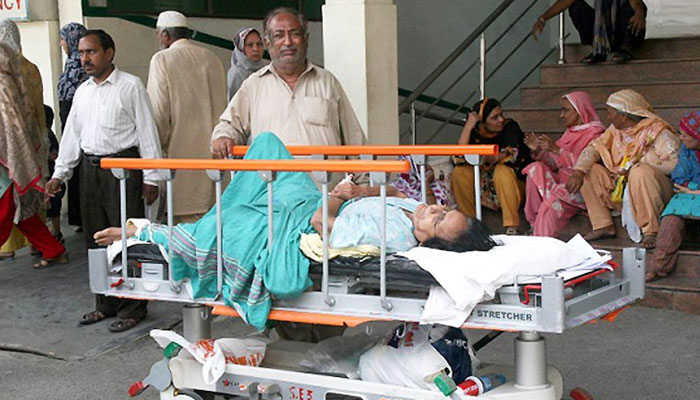

Islamabad: The year 2025 has emerged as one of the darkest chapters for Pakistan’s Ministry of National Health Services, Regulations, and Coordination (NHSRC). An extensive review of internal documents, audit reports, and FIA investigations reveals a harrowing landscape of multi-billion rupee scams, counterfeit credentials of top officials, and a regulatory breakdown that has left the country’s most vulnerable citizens at the mercy of “medicine mafias.”
The DRAP Scandal: Deregulation or Deception?
The Drug Regulatory Authority of Pakistan (DRAP) faced severe backlash this year following the deregulation of drug prices. While the stated goal was to end medicine shortages, the result was a 4,000% spike in the cost of life-saving drugs.
The Barcode Scam: A multi-billion rupee “Barcode System,” intended to curb counterfeit drugs, was exposed as a sham. Investigations allege that the service provider, M/s GS1 Pakistan, is a “benami” entity operated by senior DRAP officials. Despite collecting nearly Rs. 15 billion annually, the system remains non-functional, with 80% of medicines in the market still carrying unverified or fake barcodes.
Institutional Rot: Fake Degrees and Boardroom Coups
The integrity of health regulatory bodies reached an all-time low in 2025:
Pakistan Nursing Council (PNC): The year saw the PNC turn into a literal battlefield. The President, Farzana Zulfiqar, was booked by the FIA after HEC confirmed her degrees were forged. The scandal deepened with reports that she never even obtained a US study visa for the credentials she claimed. Despite a Presidential Ordinance to reform the council, bureaucratic inertia delayed its implementation for over 50 days.
PM&DC Under Fire: The PM&DC (Pakistan Medical and Dental Council) was rocked by allegations of nepotism and financial loss. President Dr. Rizwan Taj faces a “Conflict of Interest” inquiry for simultaneously holding a position at a private medical institution. Furthermore, 18 employees were declared “corrupt” in a Prime Minister’s Inspection Commission report regarding the registration of a medical college in Bahawalpur.
Hospital Maladministration: PIMS and Polyclinic

Islamabad’s premier healthcare facilities, PIMS and Polyclinic, became symbols of administrative decay.
The “Ghost” Machines: At Polyclinic, a Rs. 55 million ENT machine scandal surfaced. Investigations revealed that payments were made for equipment that was never delivered in 2021, only for a “fake installation” to be staged in 2025 using mismatched parts to hoodwink the FIA.
Viral Negligence: PIMS made international headlines for the wrong reasons when foreign tourists shared videos of stray dogs roaming emergency wards and patients lying on bare floors. Meanwhile, the hospital’s kitchen tenders and security contracts were reportedly manipulated to favor a “tender mafia.”
Global Aid and Research Fraud
The most damaging blow to Pakistan’s international standing came from the mishandling of global grants:
The HIV Survey Fraud: A Rs. 1 billion HIV/AIDS survey conducted by the Health Services Academy (HSA) was rejected by UNAIDS and the Global Fund due to “unreliable data” and scientific flaws. This has put future international funding at risk.
The Missing $324 Million: An audit of the Central Management Unit (CMU) revealed that records for $324 million worth of medicines and equipment provided by the Global Fund are missing. Provincial distributions in Punjab, Sindh, and KPK lack any verifiable trail, raising fears of massive embezzlement.
Human Cost: The Public Health Crisis
While officials engaged in litigation and infighting, public health indicators plummeted:
Toxic Waste: Over 4,000 tons of monthly medical waste in Islamabad is being handled by unregistered companies. Toxic waste from PIMS is reportedly being transported 150km to Peshawar or dumped in open streams, posing a massive infection risk.
Epidemic Failures: Pakistan remains one of the last two countries with active Polio, and now leads the world in Hepatitis C patients. In the capital, Polyclinic ran out of Dengue kits during a peak outbreak, forcing poor patients to pay thousands at private labs.
Conclusion: A Ministry in Crisis
The year 2025 has shown that without a “Judicial Commission” or a complete overhaul of the NHSRC, the healthcare system may be beyond repair. From the Rs. 3.53 billion loss in the Federal Directorate of Immunization (FDI) to the harassment cases involving senior doctors like Dr. Mazhar Hussain, the ministry has become a hub of litigation rather than life-saving.

Comments are closed, but trackbacks and pingbacks are open.